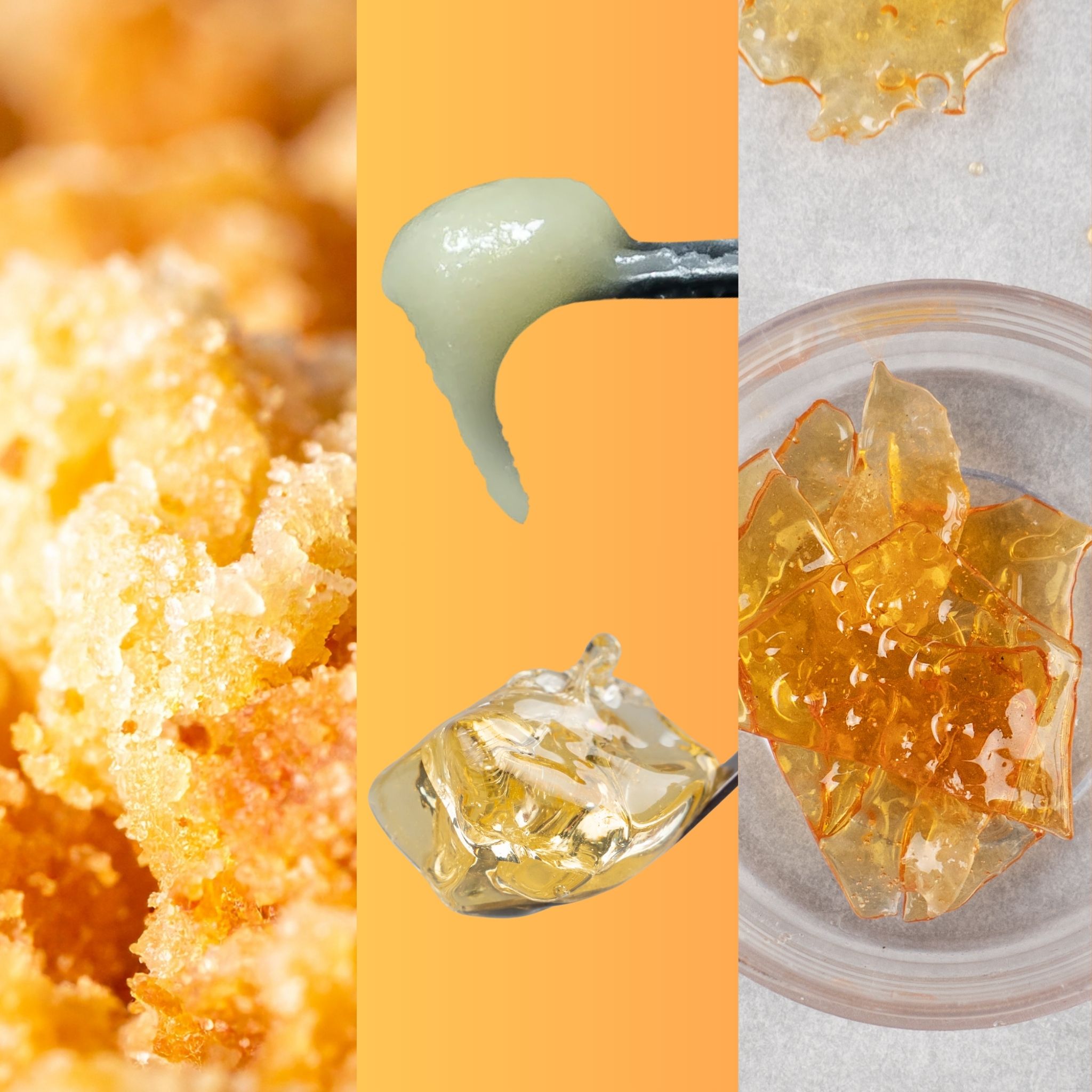
The cannabis concentrate market is booming. According to recent industry reports, different types of concentrate now represent one of the fastest-growing segments in the entire cannabis industry, with market researchers projecting growth rates exceeding 15% annually through the next decade.
But here’s the thing: Walking into a dispensary or browsing an online hemp store can feel overwhelming when you’re faced with terms like shatter, badder, diamonds, and live rosin.
What do these names actually mean? And more importantly, which cannabis concentrates are right for you?
This guide breaks down everything you need to know about cannabis concentrates, from how they’re made to how they differ in texture, potency, and flavor. Whether you’re a curious newcomer or a seasoned enthusiast looking to expand your knowledge, you’ll walk away understanding exactly what sets each concentrate apart.
What Are Cannabis Concentrates?
Cannabis concentrates are exactly what they sound like. They are concentrated forms of the cannabis plant’s most desirable compounds. Through various extraction methods, manufacturers isolate cannabinoids like THC, THCA, and CBD along with aromatic terpenes, creating products that pack significantly more punch than traditional flower.
While cannabis flower typically contains 15-25% THC, concentrates routinely test between 60-90% potency. This makes them incredibly efficient for experienced users who want stronger effects without consuming large amounts of plant material.
All cannabis concentrates start from the same source, which is the cannabis or hemp plant (Naturally Mignon only offers hemp derived cannabis). However, they end up with vastly different consistencies based on extraction methods, post-processing techniques, and how the cannabinoids and terpenes crystallize or stabilize during production.
The Main Types of Cannabis Concentrates
Understanding the different forms of concentrates helps you make informed purchasing decisions. Each type offers unique benefits, and your ideal choice depends on your preferences for flavor, potency, ease of use, and budget.
Shatter
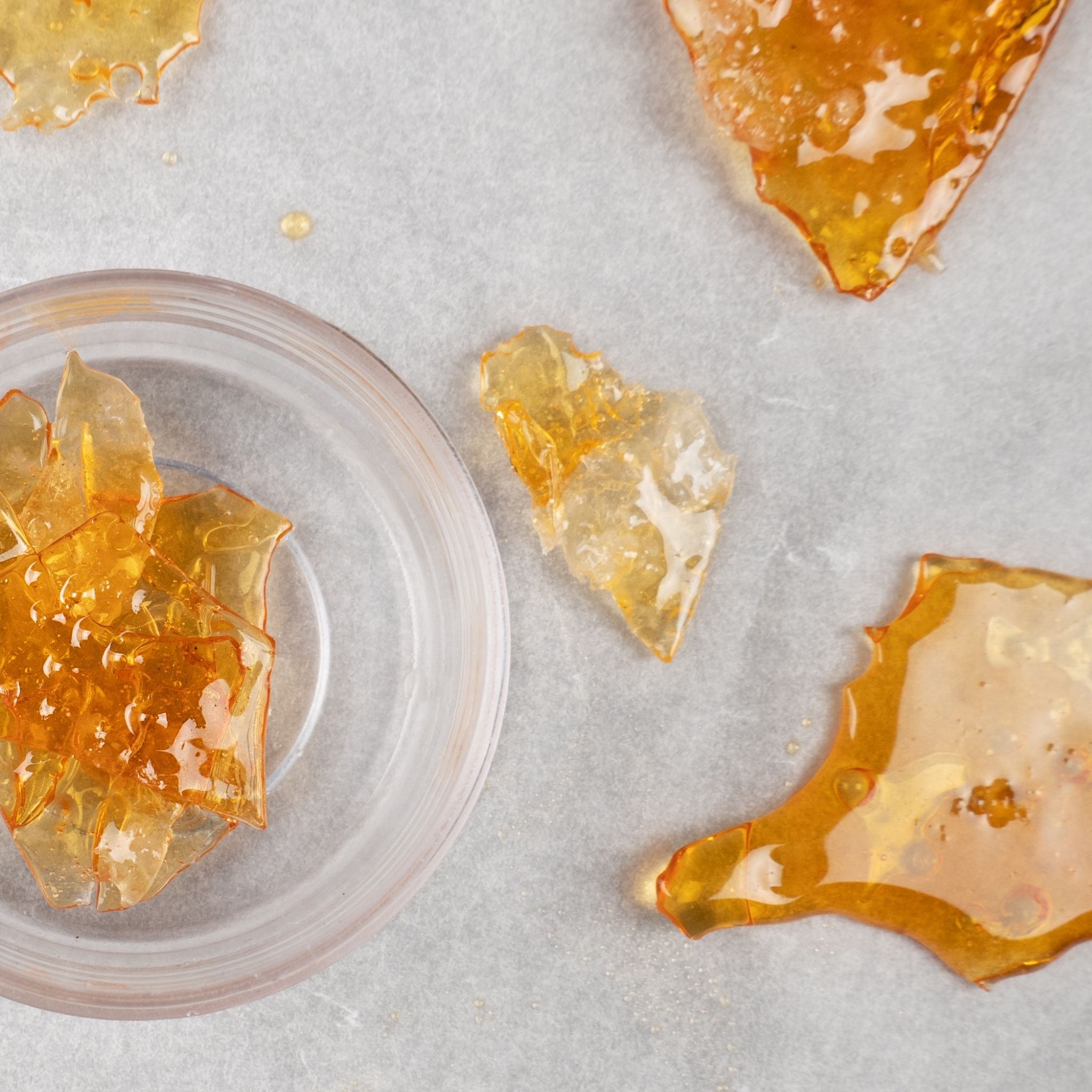
Shatter is a glass-like, translucent concentrate that “shatters” when broken, hence the name. It’s typically amber or gold colored with a hard, brittle texture at room temperature.
During production, extracted oil is spread thin and left undisturbed during the purging process. This lack of agitation allows molecules to stack together in an organized structure, creating that characteristic clear, stable consistency.
Why choose shatter?
- Excellent shelf stability—it doesn’t degrade as quickly as softer concentrates
- Easy to measure doses since you can snap off precise pieces
- The clarity indicates minimal residual plant material
- Often more affordable than premium options like live rosin
On the other hand, shatter can be harder to work with in cold environments because it becomes extremely brittle. Some users also find the flavor less pronounced compared to live products since the processing can diminish terpene content.
If you want to try this classic concentrate form, check out our THCA Shatter from Gold Spectrum.
Wax
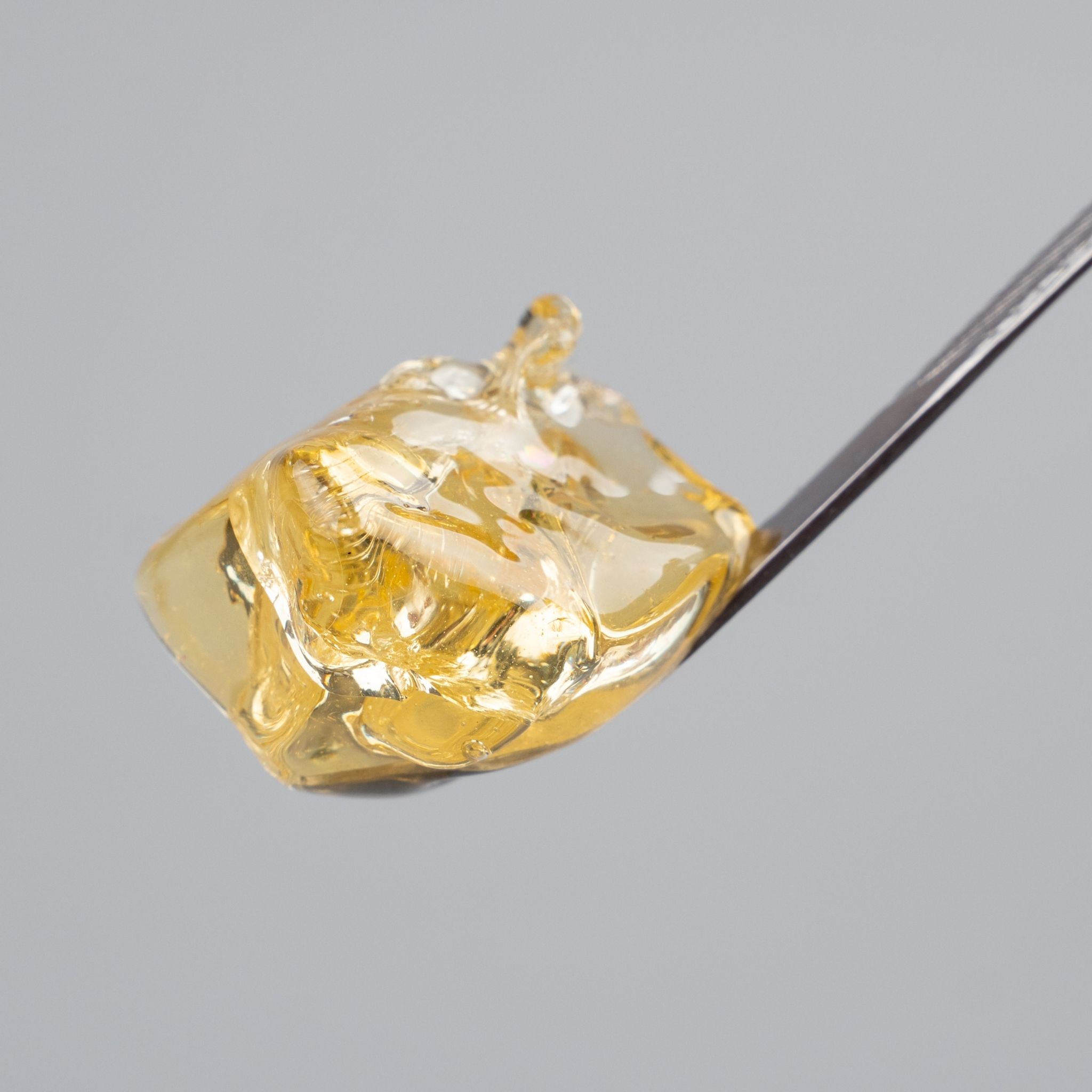
Wax has a soft, opaque, waxy consistency—similar to candle wax or lip balm. It’s incredibly easy to manipulate and scoop, making it a favorite among beginners.
The extraction process mirrors shatter production, but with one key difference: the oil is agitated (whipped) during purging. This introduces air and disrupts the molecular structure, creating that softer, opaque texture.
Why choose wax?
- User-friendly handling—easy to scoop with a dab tool
- Sticks to itself rather than your fingers
- Works well across a range of temperatures
- Forgiving for beginners learning to dab
- Ideal for loading into concentrate pens or adding to flower
The trade-off? Wax has a shorter shelf life than shatter. The increased surface area from whipping means faster terpene degradation and oxidation, so proper storage in a cool, dark place becomes essential.
Budder and Badder
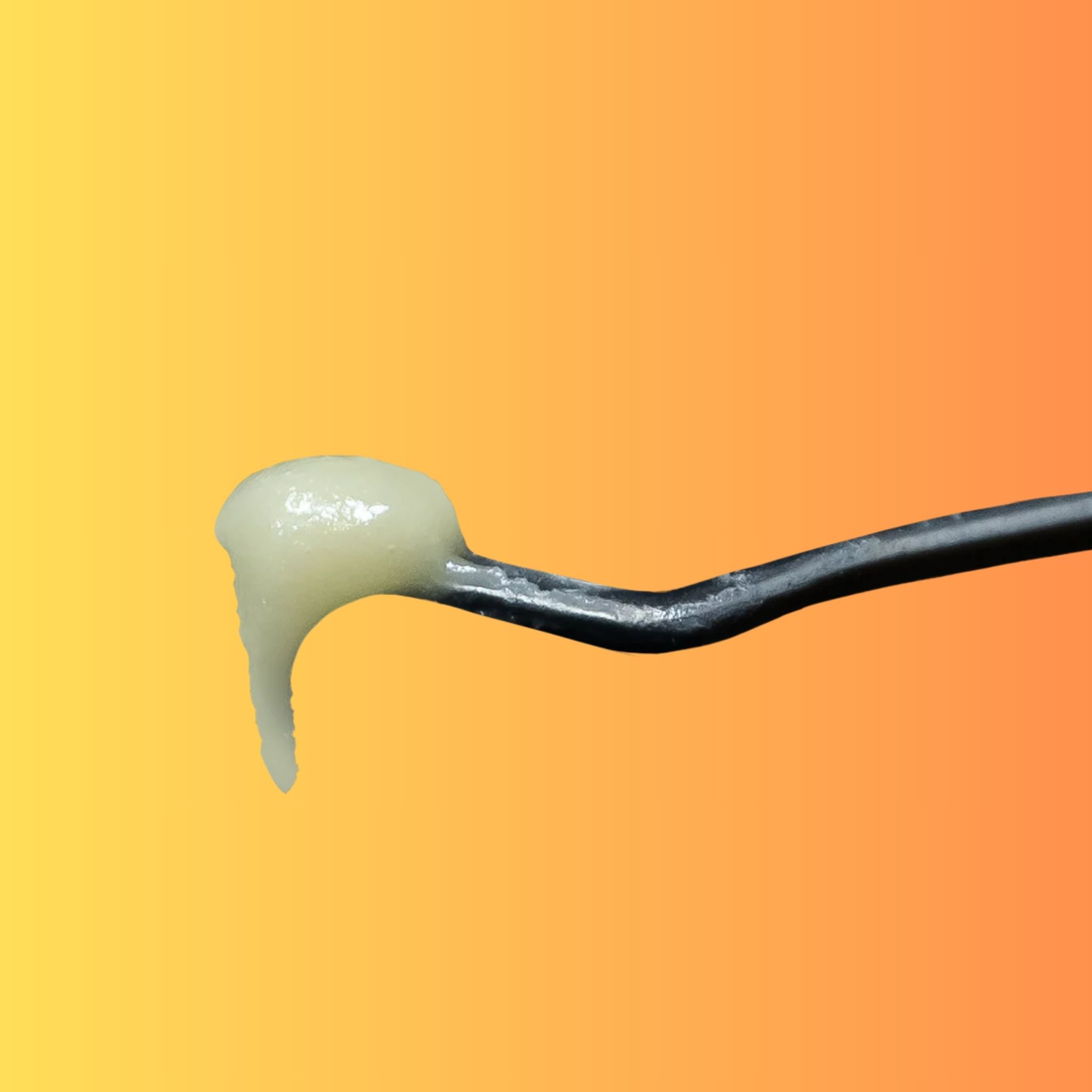
Budder (sometimes spelled “badder”) has a creamy, butter-like consistency, smooth and easy to spread. It’s typically lighter in color with an almost frosting-like appearance that many users find visually appealing.
Production involves whipping the extract at higher temperatures or for longer periods than standard wax. This creates that signature smooth, creamy texture. Live resin versions made from fresh-frozen material are especially popular because they retain exceptional terpene content.
Why choose budder or badder?
- Arguably the easiest concentrate to work with
- Scoops beautifully and spreads easily
- Excellent flavor preservation
- Many connoisseurs consider it the sweet spot between potency and flavor
- Versatile—great for dabbing, loading pens, or topping joints
Like wax, budder is more perishable than shatter due to its high terpene content. Store it properly to preserve that exceptional flavor profile.
Crumble
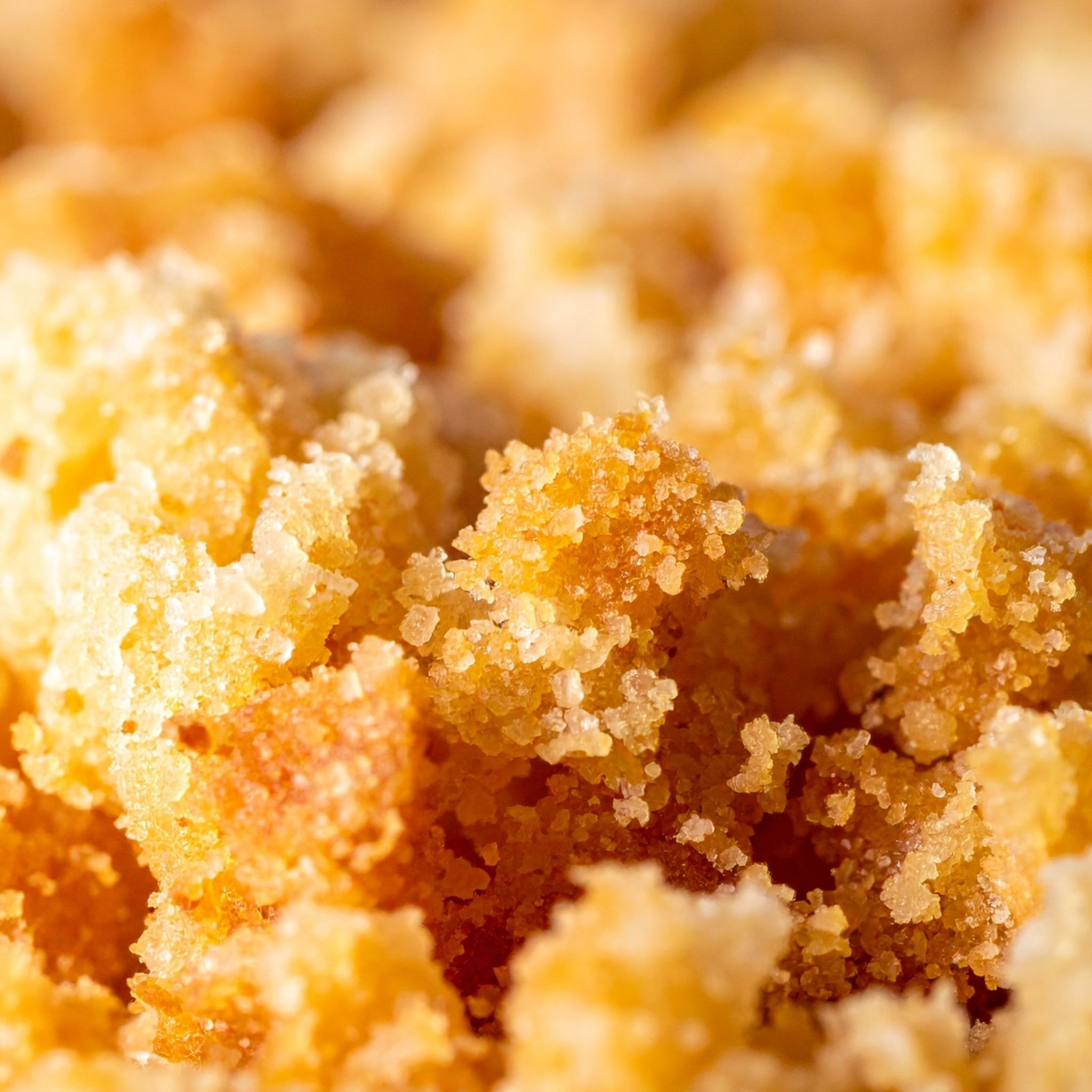
Crumble is a dry, crumbly concentrate with a honeycomb-like texture that breaks apart easily. Sometimes called “honeycomb wax,” it has a matte, opaque appearance with an almost cheese-like consistency.
The production process involves purging at lower temperatures for longer periods while agitating the oil. This extended low-heat purge removes more moisture and creates that distinctive dry, airy texture.
Why choose crumble?
- Exceptionally easy to handle. Doesn’t stick to tools or fingers
- Perfect for sprinkling onto flower in bowls or joints
- Portions easily for precise dabbing
- More affordable than premium live products
- Longer shelf stability than wetter concentrates
The extended purging process can diminish some terpenes, so crumble typically doesn’t match live resin or rosin for flavor complexity. However, for users prioritizing ease of use, value, and versatility, it’s an excellent choice.
Ready to try this beginner-friendly option? Our THCA Crumble from Gold Spectrum delivers solid potency with easy handling.
Diamonds (THCA Diamonds)
Diamonds are crystalline structures that literally look like small gemstones. They’re nearly pure THCA (or other cannabinoids) in solid, crystalline form, often sold suspended in terp sauce—a terpene-rich liquid.
Through a process called “diamond mining,” extracted oil is left to slowly crystallize over weeks in controlled conditions. THCA naturally separates from terpenes and forms solid crystals while the terpenes remain liquid as the “sauce.”
Why choose diamonds?
- The purest and most potent concentrate available often testing 95-99% THCA
- When heated, THCA converts to THC for extremely powerful effects
- Diamonds in sauce deliver maximum potency plus full-spectrum flavor
- The ultimate choice for experienced users seeking intensity
Diamonds require proper dabbing technique since the crystalline structure means uneven heating if you’re not careful. They’re typically the most expensive concentrate on the market, and for new users, the potency can be overwhelming. Start low and go slow.
Live Resin: Flavor at Its Peak
Live resin represents a significant evolution in concentrate production. It’s made from cannabis that was flash-frozen immediately after harvest rather than dried and cured. This freezing preserves the plant’s full terpene and cannabinoid profile exactly as it existed on the living plant.
The frozen plant material undergoes hydrocarbon extraction (typically using butane or propane). Because the material was never dried, those volatile terpenes that normally evaporate during curing get captured in the final product.
Texture and appearance: Live resin can range from saucy and wet to more of a sugary, crystalline consistency. It’s often golden or amber colored with a glossy, sticky appearance.
Why choose live resin?
- Exceptional flavor and aroma—often described as the closest thing to tasting the living plant
- Preserved terpenes contribute to a stronger entourage effect
- Many users report more well-rounded, nuanced effects compared to distillate
- Available in various forms including syringes for easy vape refills
Live resin commands a premium price due to specialized harvesting and cold-storage requirements. Store it in a cool, dark place to preserve those precious terpenes.
Want to experience live resin’s superior flavor? Try the Not Your Bakery THCA Dabs Live Resin or grab a Live Resin Syringe from Urb Gasline to refill your favorite vape.
Live Rosin: The Solventless Cannabis Concentrates
Live rosin is considered by many connoisseurs to be the pinnacle of cannabis extraction—maximum purity with zero chemical solvents involved in production.
The process starts with fresh-frozen plant material that’s first processed into bubble hash through ice water extraction. That hash is then pressed between heated plates under high pressure, squeezing out the oils without any solvents whatsoever. The “live” designation confirms the starting material was frozen fresh, not dried.
Texture and appearance: Live rosin typically has a creamy, badder-like consistency, though it can range from saucy to nearly solid depending on the strain and processing. Color ranges from pale blonde to golden amber—lighter generally indicates higher quality.
Why choose live rosin?
- The cleanest concentrate available—no solvents touch the product at any stage
- Exceptional flavor that rivals or exceeds live resin
- Many users report effects that feel especially clean and clear-headed
- Appeals to health-conscious consumers who prioritize purity
- Considered the gold standard for cannabis concentrate quality
Live rosin commands premium pricing—often the most expensive option on the shelf. The labor-intensive, low-yield production process justifies the cost, but it’s important to understand what you’re paying for: solventless extraction and superior starting material differentiate it from cheaper alternatives.
Experience solventless excellence with our THCA Live Rosin Jelly Dabs.
What About Cold Cured Rosin?
Cold curing is a finishing process applied after rosin has been pressed. Instead of being packaged immediately, fresh rosin is sealed and left to cure at refrigerator temperatures (around 35-50°F) for days to weeks.
During this slow cure, cannabinoids and terpenes naturally separate and recombine, often creating a wet, saucy, or jam-like consistency. The low temperature maximizes terpene preservation while transforming the texture into something smooth and easily scoopable.
So while “live rosin” describes the starting material, “cold cured” describes the finishing process. Cold cured live rosin combines both—fresh-frozen flower processed into solventless rosin, then finished with a slow cold cure for maximum flavor and ideal texture.
Live Resin vs. Live Rosin: Understanding the Key Differences
These two premium concentrates often confuse newcomers because their names sound nearly identical. Here’s what separates them:
Extraction method: Live resin uses hydrocarbon solvents (butane/propane) while live rosin is completely solventless, using only ice water, heat, and pressure.
Purity perception: Health-conscious consumers often prefer live rosin because no chemical solvents are involved. However, properly purged live resin contains no residual solvents in the final product.
Flavor profile: Both deliver exceptional flavor since they start with fresh-frozen material. Live rosin often provides a more authentic representation of the plant’s natural terpene profile.
Price point: Live rosin typically costs more due to the labor-intensive, lower-yield production process. Live resin offers similar quality at a more accessible price.
Texture: Live resin tends toward saucier, more liquid consistencies. Live rosin usually presents as creamier and more solid, especially after cold curing.
Distillate Syringes: Versatility in Your Hands
Distillate and live resin syringes have emerged as popular options for consumers who want flexibility. These small applicators contain concentrated oil that can be used multiple ways.
Primary uses include:
- Refilling vape cartridges and pods—the syringe tip allows precise, mess-free filling
- Dabbing directly from the syringe onto a heated nail or banger
- Oral consumption—distillate is already decarboxylated (activated) and can be eaten
- Topping flower—add a ribbon of oil to joints, bowls, or packed bongs
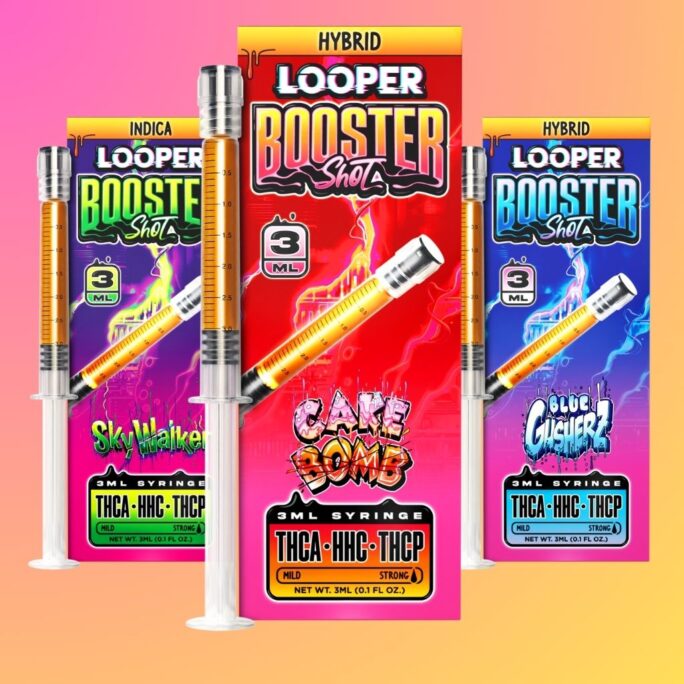
The Looper Booster Shot THC Oil Syringe and the Peak THCA Distillate Syringe are examples that offer potent cannabinoid blends and distillates perfect for refilling your favorite device.
Essential Tools for Consuming Concentrates
Cannabis concentrates require specific equipment for proper consumption. Here’s what you’ll need to get started:
Dabbing Devices
Traditional dab rig: A water pipe designed specifically for concentrates, featuring a smaller chamber and a fitting for a nail or banger instead of a standard bowl. Water filtration cools the vapor for smoother hits.
E-rig (electronic rig): Self-contained units that heat electronically—no torch required. These offer precise temperature control and convenience with a higher upfront cost but easier learning curve.
Nectar collector/dab straw: A simpler, portable option where users heat the tip, touch it to concentrate, and inhale. Great for on-the-go use.
Heating Equipment
Quartz banger: The bucket-shaped attachment holding your concentrate. Quartz is most popular for clean flavor and consistent heat retention.
Butane torch: Essential for heating bangers to proper dabbing temperature. Invest in a quality torch for consistent results.
Terp timer/thermometer: Helps you hit the ideal temperature range (450-550°F for flavor, higher for bigger clouds). Proper temp control separates a flavorful experience from a burnt, harsh hit.
Accessories
Dab tools: Metal, glass, or ceramic implements for handling concentrates. Different tips work better for different textures—pointed for shatter, scoop ends for badder and wax.
Carb cap: Placed over the banger after loading concentrate, trapping heat for lower-temperature dabs. Essential for flavor preservation and complete vaporization.
Storage containers: Silicone containers work well for daily use since concentrates don’t stick. Glass jars are better for longer-term storage, especially for diamonds and sauce.
Choosing the Right Concentrate for You
With so many options available, how do you decide? Consider these factors:
Experience level: Beginners often find wax, crumble, and badder easiest to handle. Shatter requires more precise technique, while diamonds and live rosin suit experienced users who appreciate nuanced differences.
Flavor priority: If maximum flavor matters most, live resin and live rosin deliver the fullest terpene profiles. Distillate and shatter prioritize potency over taste.
Budget: Crumble and wax typically offer the best value. Live rosin commands premium prices but delivers unmatched purity for those who prioritize solventless products.
Consumption method: Syringe-format concentrates work best for vape refills. Badder and crumble excel for topping flower. Diamonds and shatter shine when dabbed properly.
The Bottom Line on Cannabis Concentrates
Cannabis concentrates offer potency, efficiency, and flavor profiles that traditional flower simply can’t match. Whether you’re drawn to the crystal-clear purity of shatter, the easy handling of crumble, or the artisanal quality of live rosin, there’s a concentrate perfectly suited to your preferences.
The concentrate market continues expanding as extraction technology improves and consumer demand grows. Understanding what differentiates each type empowers you to make confident purchasing decisions and get the most from your cannabis experience.
Ready to explore? Browse our complete collection of cannabis concentrates to find your perfect match.
Remember: Cannabis concentrates are significantly more potent than flower. Start with small doses, especially if you’re new to concentrates, and always purchase from reputable sources that provide third-party lab testing.